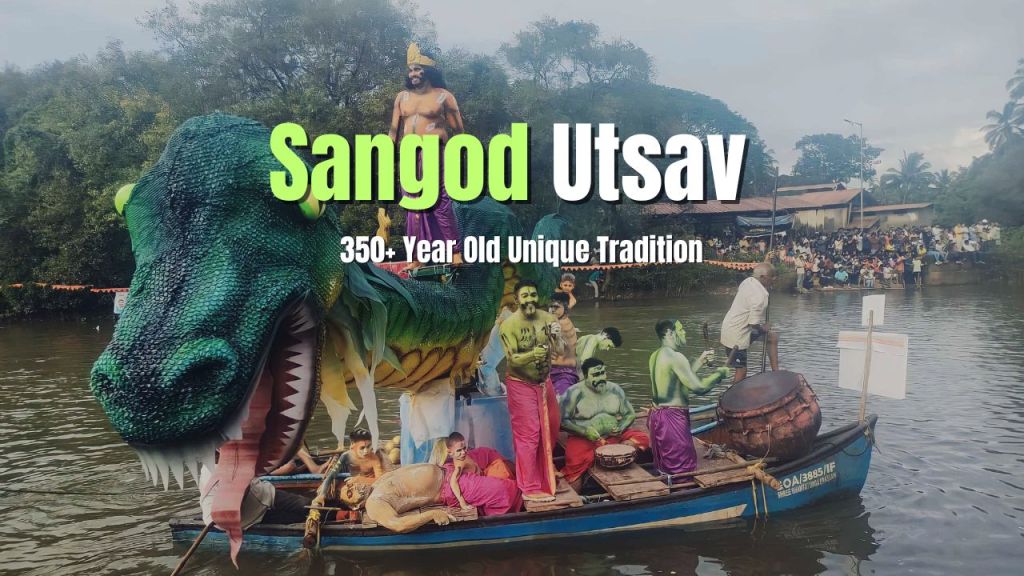
Nestled in the heart of Goa, the Sangod Utsav, a vibrant and unique festival, offers a captivating glimpse into the Goa’s rich cultural heritage. The Sangod Utsav, also known as Devi’s Sangod, is a unique Goan tradition that has been celebrated in the village of Cumbharjua for more than 350 years.
On the seventh day of Ganesh Chaturthi, people from many villages near Marcel in Goa gather to immerse Ganesh murti of Shantadurga Cumbharjuvekarin Temple at the Cumbharjua Canal. However this is not a regular ganapati visarjan but a grand river parade of idol on colourful sangod. This tradition has been going on for a long time, and in the last 20 years, it has become popular with tourists too.
The Shantadurga Cumbharjuvekarin temple itself has a long history going back over 500 years. It used to be in Carambolim, but was moved to Marcel in Ponda during the Portuguese Inquisition for safety.
In an interview held by herald, the president of the temple mentioned that a Wadiye family from Cumbharjua left a Kalash (pot) as an offering in the temple as they could not celebrate Chaturthi due to epidemic. This is where it all started: celebrating Ganesh Chaturthi at the Devi’s temple.
The Significance of Sangod

On the day of immersion, after the afternoon Aarti the Ganesha idol is carried in a ceremonial palanquin to the riverbank around 3:30 PM. The idol is then placed on the colorful Devi’s Sangod for immersion. Sangod is a Konkani term for the boats used in Ganesha immersions. They are long canoes joined together for stability.
According to tradition, Devi’s Sangod is accompanied by a Bhat (priest), Jalmi (water carrier), Vajantri (musicians), temple committee members, and Katkar (the person who carries the pole). Approximately 15 Sangods, or canoes connected together, make seven rounds on a small river route. Only non-motorized canoes are permitted, and participants must use oars to propel their floats in the competition.
Community involvement and Participation
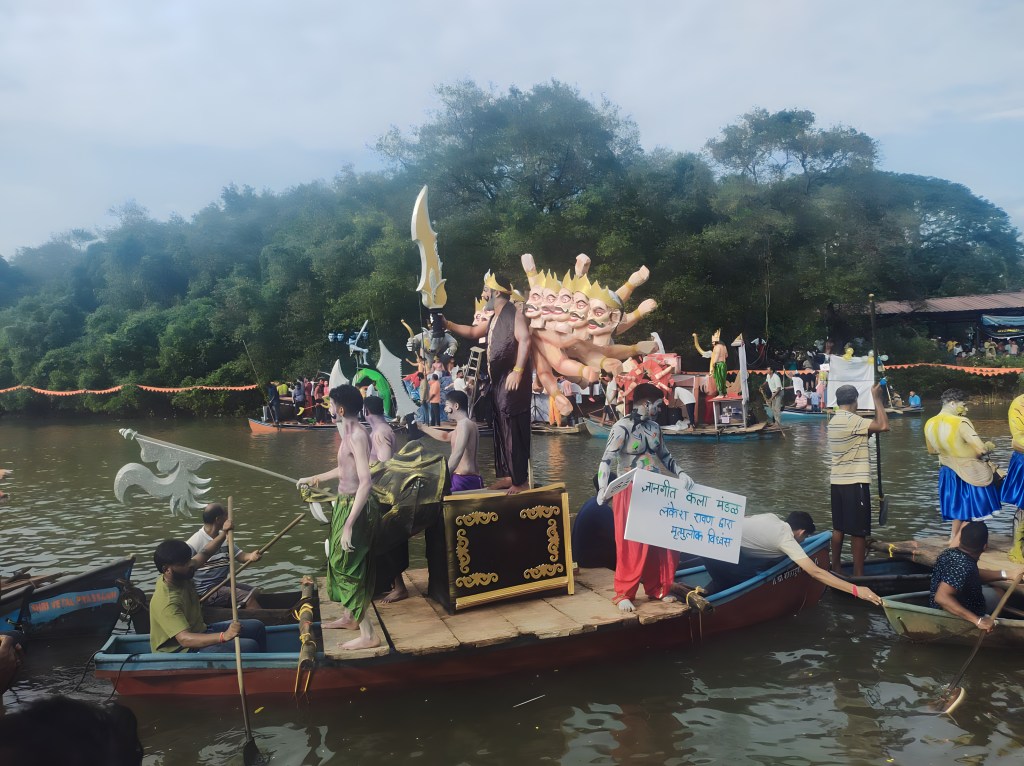
Devi’s Sangod is jointly celebrated by Shree Shantadurga Kumbharjuvekarin Devasthan and Shree Ram Devasthan, Rambhuvanwada. The canoes are decorated with flowers, and the participants wear colorful clothing and body paint depicting social issues or stories from ancient Hindu texts. The celebration is enhanced by the lively music.
As the years passed, the crowds attending the immersion grew, with more and more villagers joining in with their own Sangods. This eventually led to the creation of the Sangod Utsav. To preserve this tradition, the state government and local panchayat began organizing a float competition.
In recent years, the Sangod Utsav has gained popularity as a tourist attraction, drawing visitors from both within and outside Goa. The festival’s unique blend of tradition, culture, and community spirit offers a memorable experience for all.
.
 Aadle Goi
Leave a comment