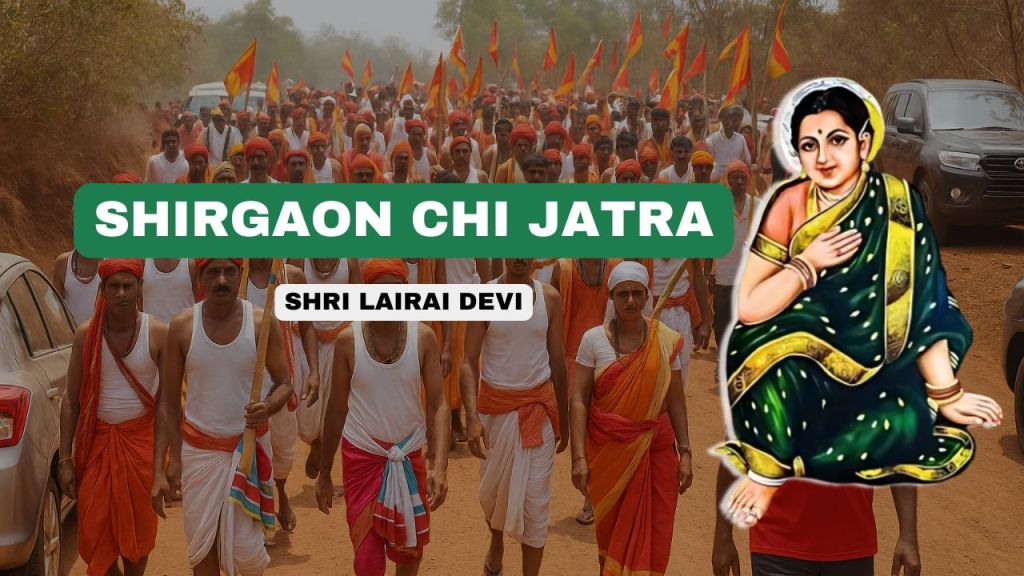
Every year, a mesmerizing spectacle unfolds in the serene village of Shirgao, located in North Goa’s Bicholim taluka — the Lairai Jatra, also known as the Shirgao chi Jatra. This vibrant festival pays homage to Goddess Lairai, who is believed to be an incarnation of Goddess Parvati. The event attracts thousands of devotees from Goa and neighboring regions. With its unique blend of faith, tradition, and cultural grandeur, the festival has rightfully earned its place as one of Goa’s most iconic religious events.
Origins and Significance of Lairai Jatra
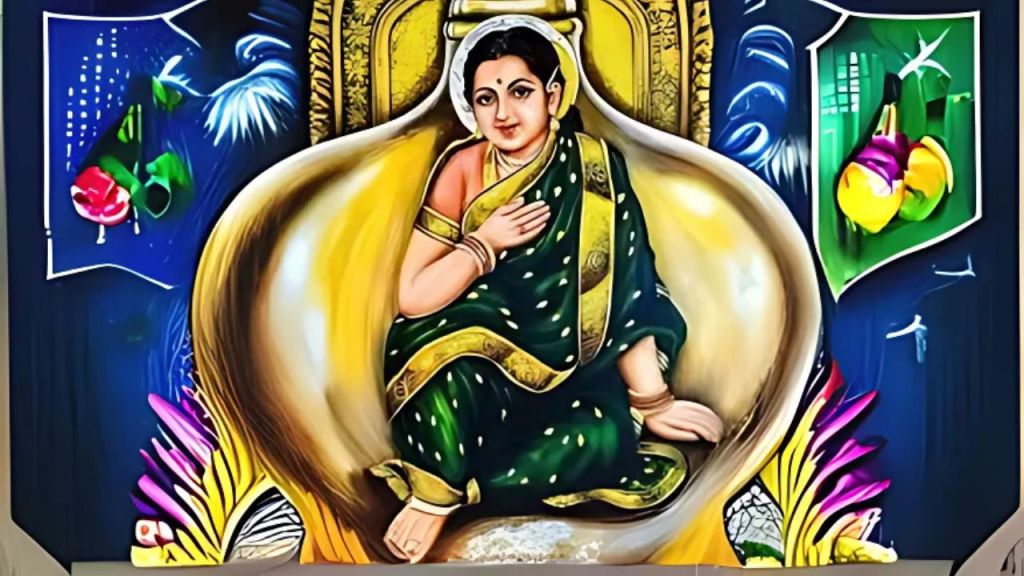
According to legend, Lairai is one of the seven sisters and brothers in the local group of deities. Others are Mahamaya of Mayem, Kelbai of Mulgao, Morjai of Morjim, and Shitalai of Mayem. She is also connected to Mirabai, who was later converted to Our Lady of Milagres in Mapusa, and Ajadipa from Anjadiv Island. Lairai’s only brother is Khetoba of Vainginim. While many of her siblings settled in other parts of Goa and the Konkan region, Lairai made Shirgao her abode, promising to protect the village and its people.
Legend narrates that these seven sisters and one brother journeyed to Goa together, riding a majestic elephant. While it is believed they descended the Western Ghats, most likely via the Chorla Ghat. Their exact place of origin remains a mystery.
Their journey brought them through Bicholim and into Mayem village. According to folklore, the elephant that carried them remains immortalized in stone at Vydanar, near Mayem. There, a carving of the elephant in laterite stone can still be seen atop a hillock, close to the temple of Maya-Kelbai (also known as Kelambika).
For the local community, the festival is not just a religious occasion; it symbolizes devotion, unity, and the continuation of centuries-old traditions passed down through generations. Lairai Jatra typically takes place in April or May, marking an important spiritual milestone in Goa’s festive calendar.
Rituals
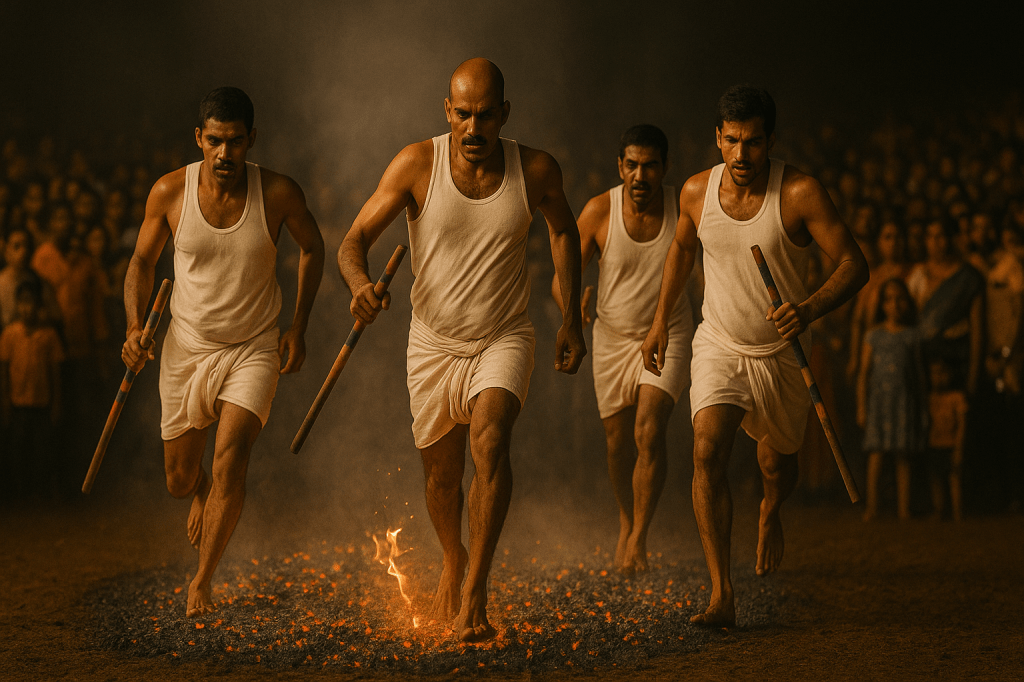
The followers of Sri Lairai who take part in the fire-walking ritual are known as Dhonds. Both men and women participate, easily identified by their simple attire: a dhoti and a towel wrapped around their waist. Each Dhond carries a vibrantly decorated cane called a Beth or Bethkathi—a six-foot cane, curved at one end and adorned with colorful woolen tassels.
Dhonds undergo strict spiritual preparation for the ritual. This includes maintaining a 40-day vegetarian diet, bathing after every meal to uphold ritual purity, and adhering to disciplined daily routines.
On the eve of the fire-walking ceremony, devotees build a massive wooden pyre using dried tree bark and timber. The pyre typically stands on a 10-foot square base, rising into a conical shape. Devotees from across the region contribute to its construction, each bringing wood as an offering of devotion.
At midnight, the deity is carried in a grand procession from the main temple to a shrine near the towering pyre. As the procession passes the pyre, a small flame is ceremonially cast into it, igniting the dry wood in a powerful symbol of transformation. The idol of Goddess Lairai is then installed at the shrine, where over 10,000 Dhonds gather in anticipation of the sacred ritual.
By 3:00 AM, the pyre has burned down to glowing embers. Volunteers carefully spread the red-hot coals across the ritual ground, preparing the path for the fire-walking ceremony.
The Zatra is more than a ritual, it is a commemoration of an ancient legend. According to local folklore, the Danavas (demons) once attempted to burn down Shirgao, seeking to destroy Goddess Lairai and her devoted followers. But in a powerful act of faith and courage, Lairai and her devotees walked unscathed through the flames, extinguishing the fire and saving the village from destruction.
As Goa continues to evolve with modernity, festivals like Lairai Jatra serve as important reminders of the state’s deep-rooted spiritual and cultural legacy. For those seeking an authentic cultural experience in Goa, witnessing the Lairai Jatra is a journey into the heart of its traditions.
 Aadle Goi
Leave a comment