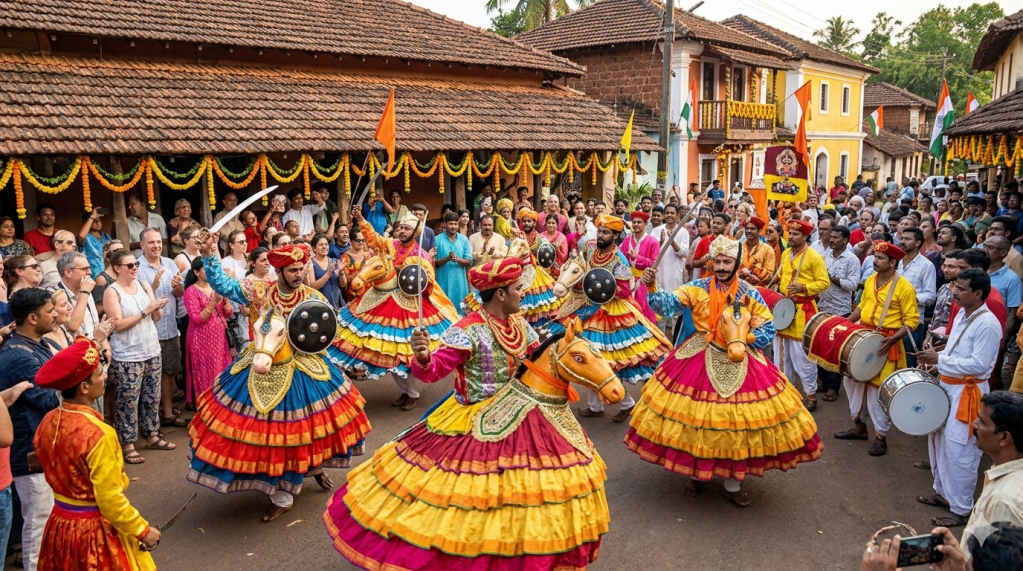
Every year during the vibrant celebrations of Shigmo, the villages of Goa come alive with drums, colors, and powerful performances. Among the many traditions that define this festival, one spectacle stands out for its energy and symbolism, Ghode Modni, the famous warrior dance of Goa.
More than just a performance, Ghode Modni is a dramatic retelling of bravery, victory, and the martial spirit of Goa’s past.
What Does Ghode Modni Mean?
The name itself explains the essence of the dance. The word “Ghode” means horse, while “Modni” refers to rhythmic movements or dance-like motion. Together, Ghode Modni literally translates to “the horse dance.” In this unique folk dance, performers appear as warriors riding horses, recreating scenes of battle and victory through music and movement.
The Story Behind the Dance
According to popular belief, Ghode Modni celebrates the victorious return of warriors who had gone to battle during the festival of Dussehra and returned home around the time of Holi. The dance became a way for communities to remember their courage and honor their triumph. Some historians also associate the tradition with the Ranes of Sattari, local warrior leaders who resisted foreign rule in Goa. Their bravery and rebellion became part of Goan folklore, and Ghode Modni evolved as a cultural tribute to that spirit.
Over the centuries, the dance transformed from a historical remembrance into a vibrant cultural performance performed during Shigmo celebrations.
The Spectacle of Ghode Modni
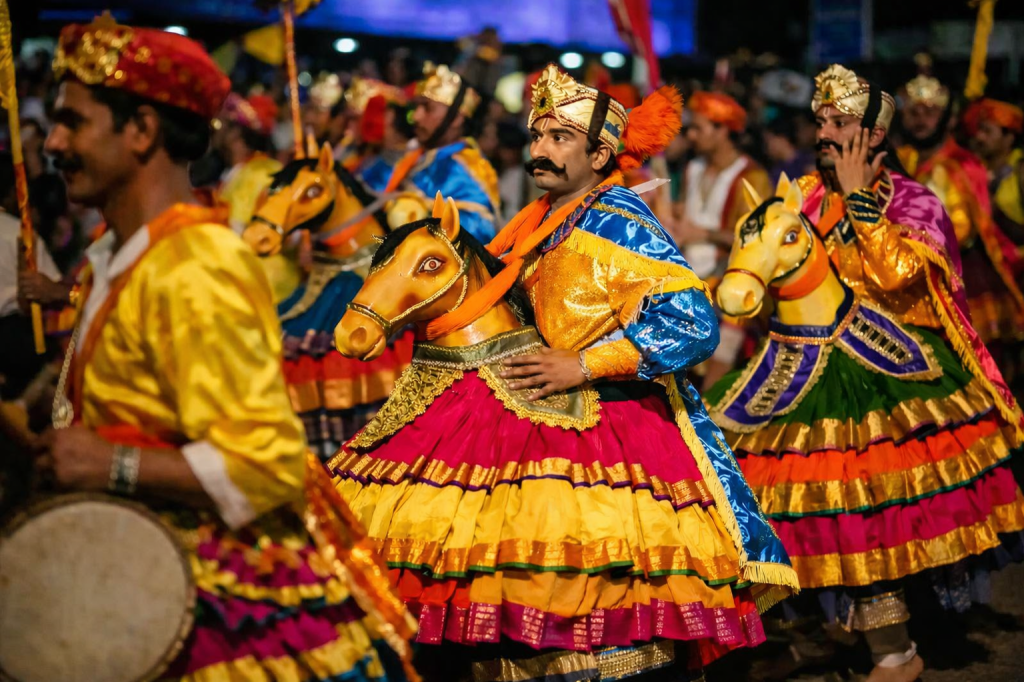
A Ghode Modni performance is both theatrical and powerful. Dancers dress like warriors wearing colorful traditional costumes and turbans. Around their waist they tie a decorated wooden horse frame, giving the illusion that they are riding horses. Holding swords and shields, the performers move rhythmically to the beats of dhol, taso, and cymbals, recreating scenes of battle and victory. The dance includes warrior formations, horse-like movements, mock combat sequences, and high-energy drum rhythms. The result is a thrilling performance that captures the audience’s attention instantly.
Where Ghode Modni is Most Popular
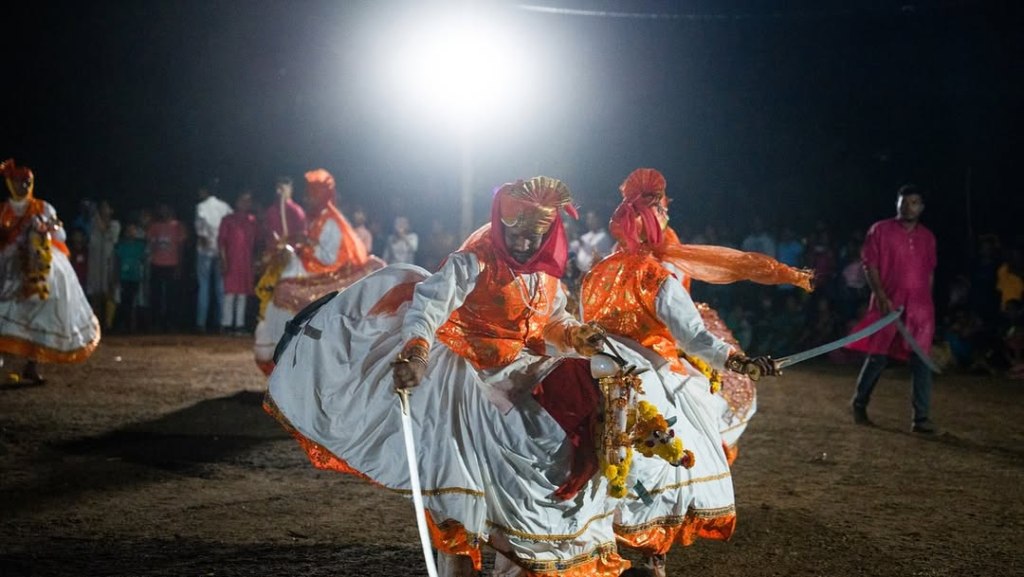
Although Ghode Modni is known across Goa, it is especially popular in the northern talukas such as Pernem, Bicholim, and Sattari. These regions have preserved the tradition for generations and continue to perform it during Shigmo processions. In many villages, the performance is not just entertainment; it is a community celebration where locals gather to witness a piece of their cultural identity.
Ghode Modni and the Shigmo Festival
Ghode Modni is closely associated with Shigmo, Goa’s traditional spring festival celebrated around Holi. The festival marks the arrival of spring and is known for colorful parades, folk dances, and temple celebrations across the state. During Shigmo processions, Ghode Modni often becomes the highlight of the event, symbolising bravery, pride, and the spirit of the land.
A Living Tradition of Goa
In today’s modern Goa, where tourism and urban life dominate the landscape, traditions like Ghode Modni remind people of their roots. It is not just a dance. It is a story passed down through generations. A story of warriors, villages, music, and pride. As long as the drums of Shigmo continue to echo through Goa’s villages, the powerful horse dance of Ghode Modni will keep galloping through time, carrying with it the memories of Goa’s fearless past.
 Aadle Goi
Leave a comment