Deep in the lush green valley of Shristhal in Canacona, surrounded by hills and forests, stands one of Goa’s most ancient temples — the Shri Mallikarjuna Temple. For most of the year, this place remains calm and deeply spiritual. But once a year, everything changes.The quiet village turns into a vibrant gathering of devotion, rituals, and centuries-old traditions during the Shristhal Jatra — a festival that is not just celebrated, but experienced.
The Deity of Shristhal
At the heart of this celebration is Shri Mallikarjuna, a revered form of Lord Shiva worshipped by the people of Canacona for generations. Unlike grand temple traditions seen elsewhere, the connection here is deeply local — rooted in village life, community identity, and ancestral belief.For many families, the deity is not just a god, but a protector who has watched over their land, their homes, and their people for centuries.
How the Jatra Became a Tradition
The origins of the Shristhal Jatra go back to a time when communities in this region depended heavily on nature and lived closely connected to their surroundings. Worshipping a local form of Shiva as a guardian deity became central to their lives.
Over time, an annual gathering began — a way to offer gratitude, seek protection, and bring together nearby villages. What started as a simple act of devotion gradually evolved into a complex and powerful festival filled with rituals, processions, and symbolic performances. Even today, the essence remains unchanged — it is still a festival led by the people, for the people.
The Procession to the Sea
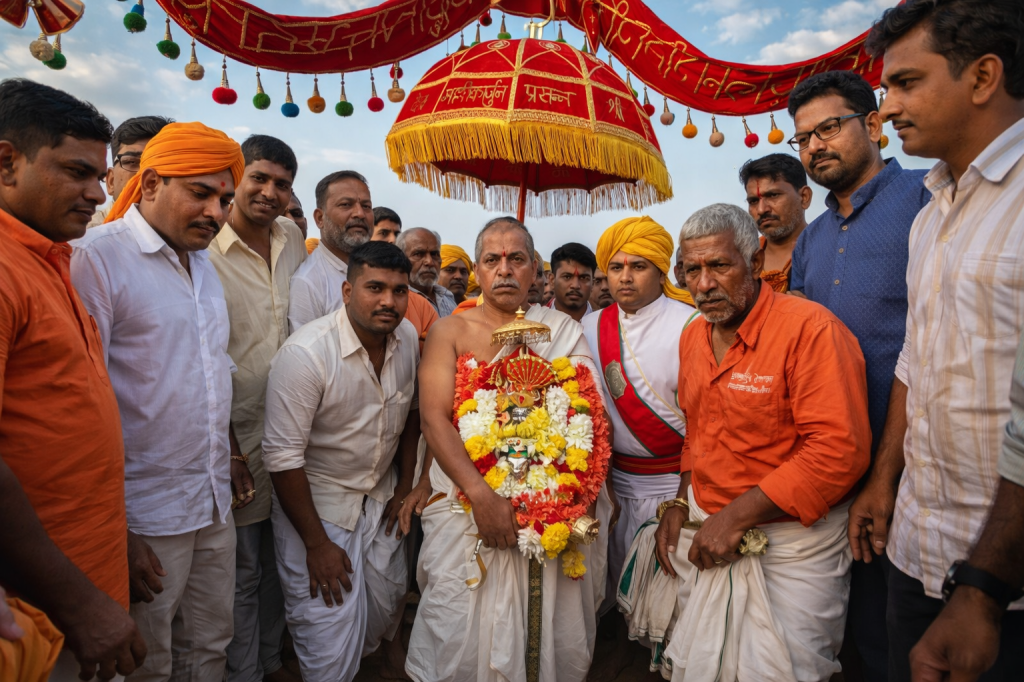
One of the most important moments of the jatra is the ceremonial procession of the deity towards the sea. Early in the morning, the idol of Shri Mallikarjuna is carried out of the temple in a grand procession filled with rhythmic drums, chants, and devotion. The journey stretches for several kilometres until it reaches the shores near Rajbag. Here, the deity is offered a ritual bath, and devotees also step into the sea, believing it to be a moment of purification and blessing. As the procession returns, it carries with it an energy that connects the temple, the land, and the sea — a reminder of Goa’s deep spiritual relationship with nature.
Shisharanni: The Ritual of Devotion and Endurance
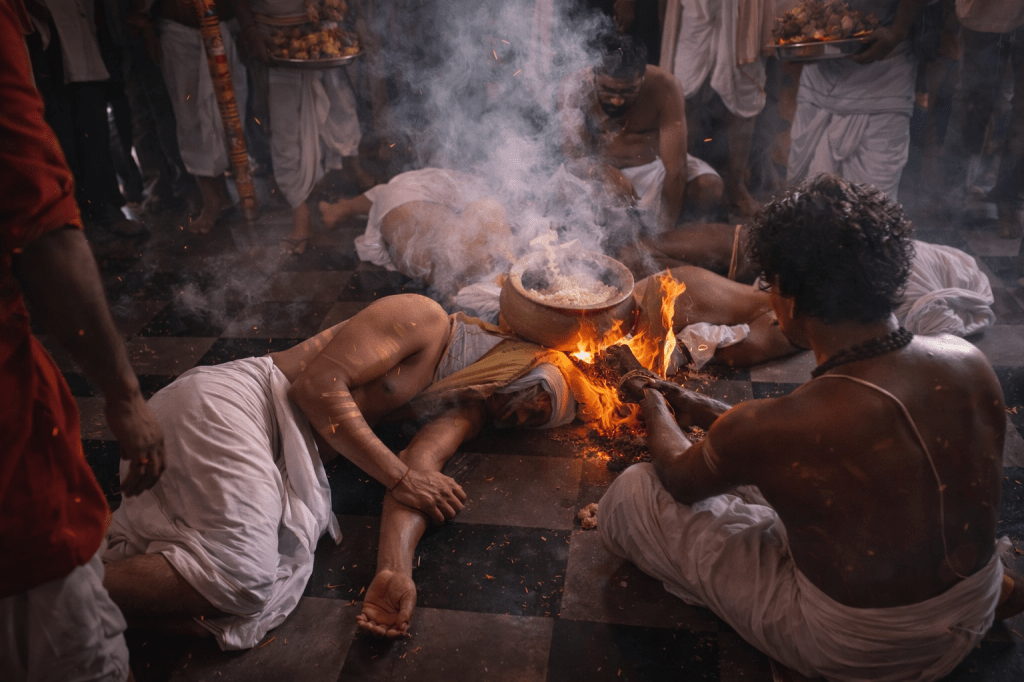
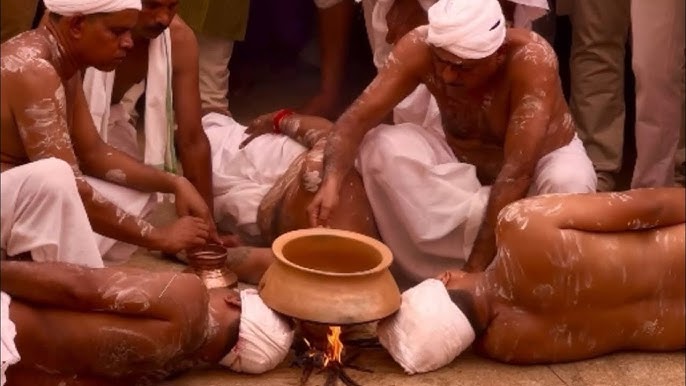
Among all the rituals, one of the most intense and fascinating is Shisharanni, performed at Gaondongrem in Canacona. Shisharanni, meaning “cooking on the head,” is carried out by selected participants known as Gade as an act of complete devotion. The ritual begins with their ceremonial bathing, followed by dressing in traditional attire and the application of sandalwood paste across the body, symbolising purification. Their heads are then carefully covered with layers of wet cloth and plantain trunk, preparing them for what follows. In a powerful display of faith and endurance, needles are pierced through parts of their body, reflecting their deep spiritual commitment.
The most extraordinary moment comes when three Gade sit together and form what is known as a “head-hearth.” Using their heads as the base, a small hearth is created, and rice is cooked in a vessel placed above it. This ritual is not just about endurance — it represents surrender, belief, and an unshaken connection with the divine. Even today, it continues to draw people who come to witness a tradition that has remained unchanged for generations.
A Festival Rooted in Community
The Shristhal Jatra is deeply connected to the local communities of Canacona, especially the Kunbi and Kshatriya Maratha groups, along with temple mahajans and village families. What makes this festival special is that it has not been commercialised or diluted over time. It still belongs to the people, carried forward by tradition, not trend.
More Than a Festival
In today’s fast-changing Goa, where development and modern life are reshaping landscapes and lifestyles, festivals like the Shristhal Jatra stand as reminders of something deeper. They remind us of a time when faith was lived, not displayed. When rituals were not performances, but beliefs. And in the quiet valley of Shristhal, as drums echo and traditions unfold, one thing becomes clear. Goa is not just beaches and tourism. Goa is also these stories, these rituals, and these living traditions.
 Aadle Goi
Leave a comment