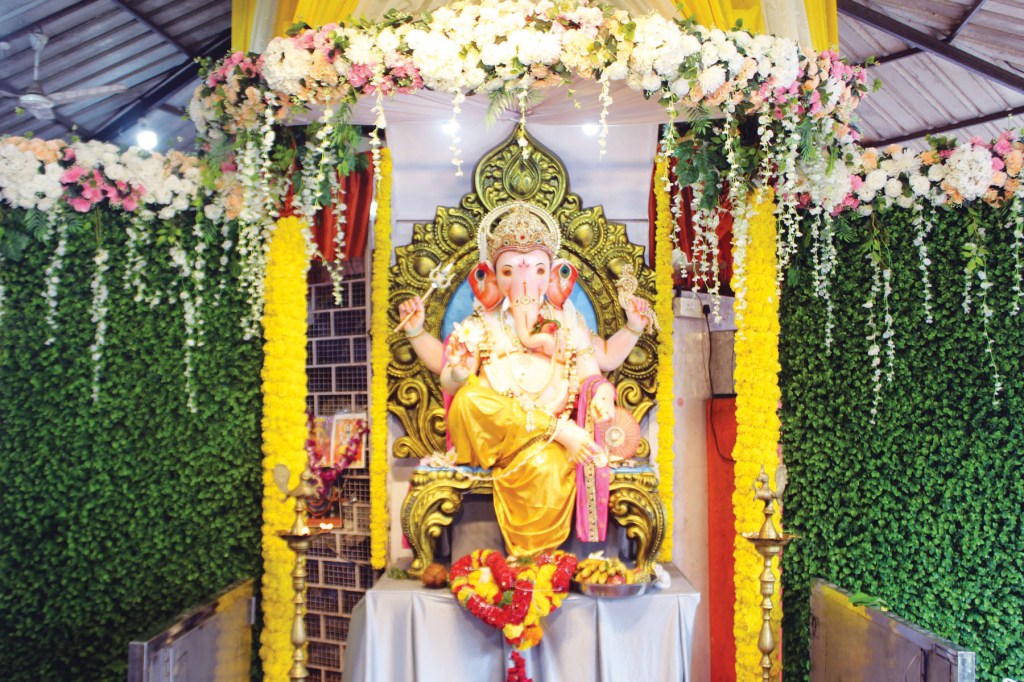
Ganesh Chaturthi, more popularly known as Chovoth in Goa, is a vibrant and deeply rooted celebration honouring Lord Ganesha. This Hindu festival, celebrated with unparalleled enthusiasm, brings generations together to celebrate the birth of Lord Ganesh.
A Tapestry of Tradition
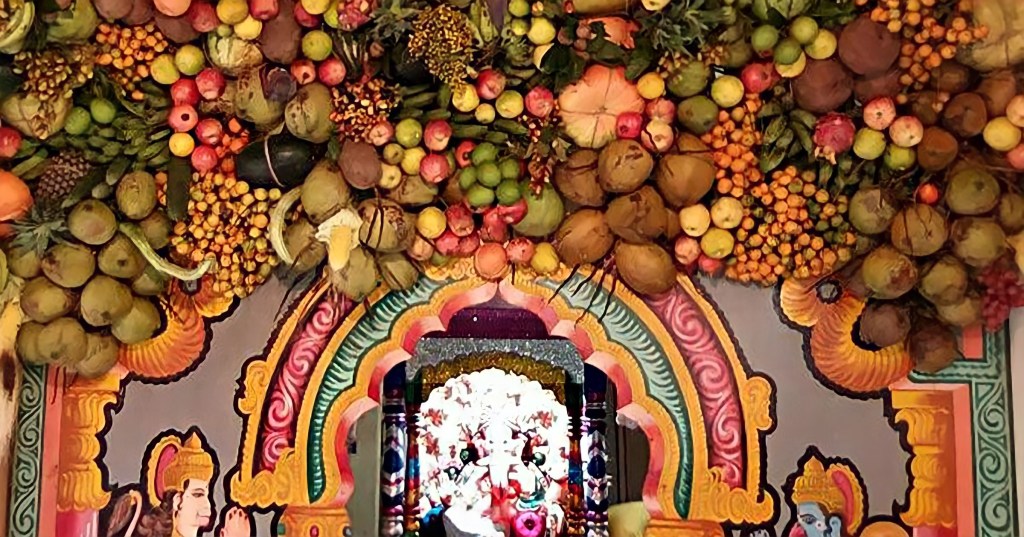
Chovoth is more than just a religious observance; it’s a cultural festival. Chaturthi typically spans between 1.5 to 21 days, with preparations commencing weeks in advance. Anchestral Homes are transformed into festive spaces, adorned with detailed paper decorations called foli and the iconic matoli – a wooden canopy loaded with fruits, flowers, and medicinal herbs. Matoli usually contains coconut, seasonal fruits, mango leaves, aambade (hog plums), kelicho ghad (Banana bunch) etc.
This tradition not only beautifies homes but also serves as a living encyclopedia of local flora and its medicinal properties.
Heart of the Celebration: The Ganesh Idol
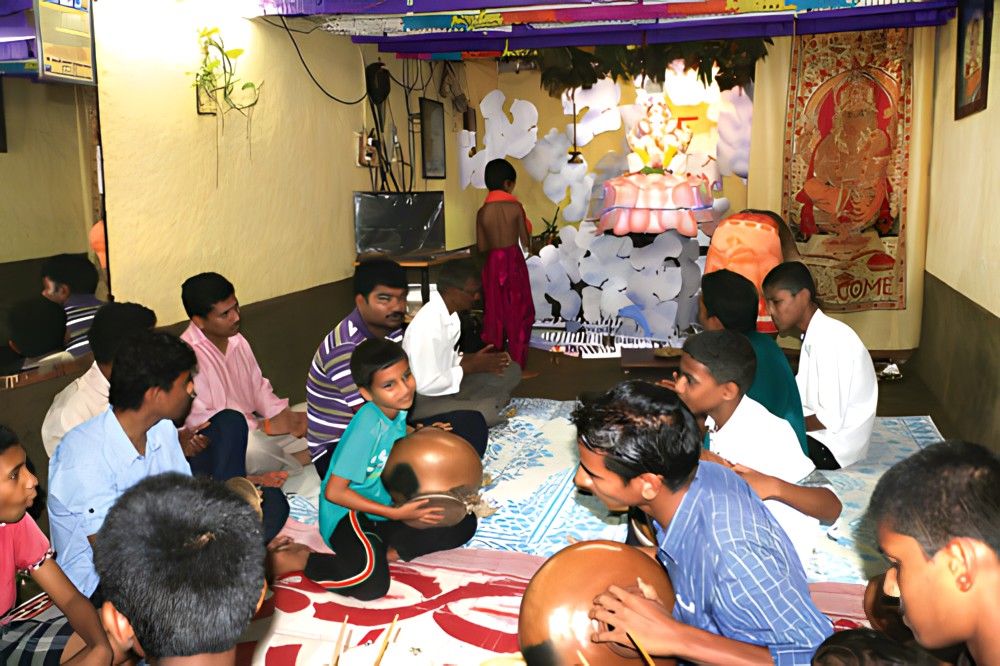
Central to Chovoth is the clay idol of Lord Ganesha. Traditionally, these idols are crafted by local artisans using riverbed clay, symbolizing a return to nature upon immersion. Families often personally collect their idols, creating a joyous procession accompanied by music and chants.
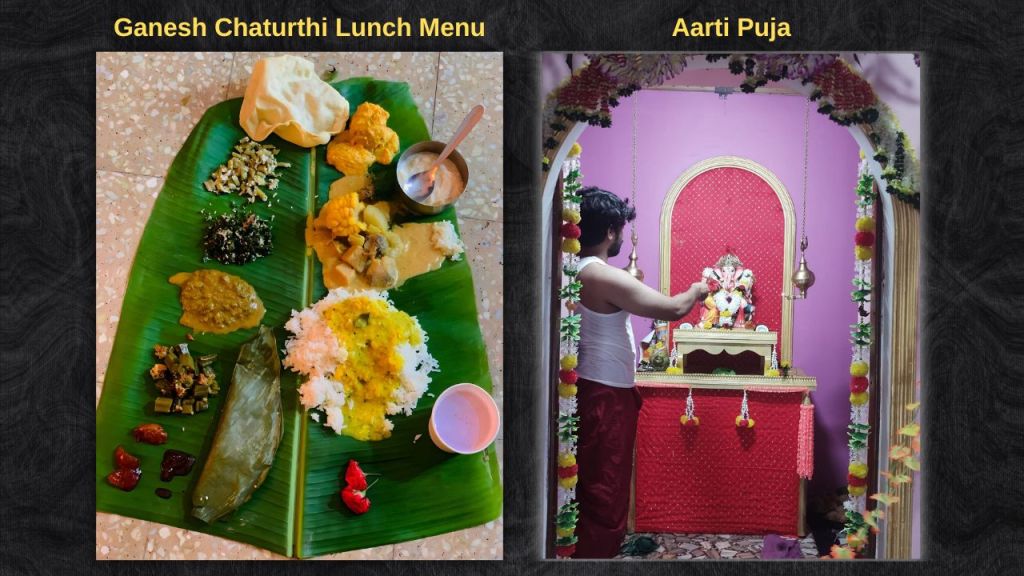
The festival is marked by daily prayers and aarti, accompanied by a grand feast featuring traditional Goan delicacies. Modak, Ganesha’s favorite sweet, is a staple, along with other sweet treats like mangane, Shevya Kheer and laddoos. The aroma of chanya tonak and puri fills the air, creating a culinary symphony.
A unique feature of Chovoth is the musical accompaniment during aartis. The rhythmic beats of the gumot, shamel, and zhaan create a devotional ambience, elevating the spiritual experience.
Economic Impact
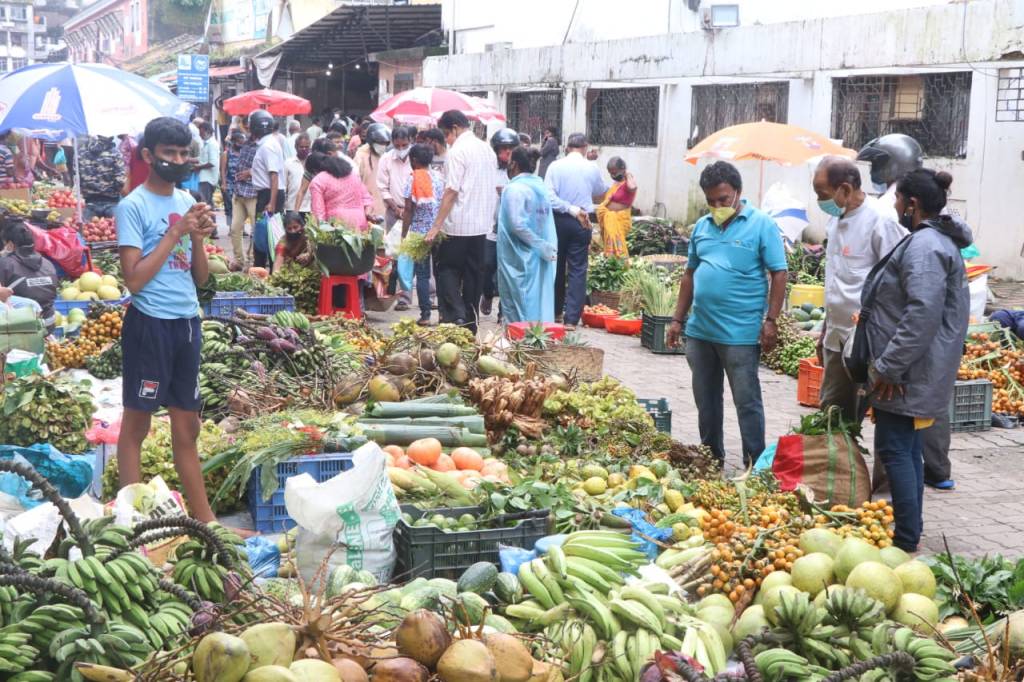
Chovoth is also a significant economic event for Goa. The festival generates a lot of revenue for the state, as people from all over come to celebrate. The festival also provides employment opportunities for a number of people, including artisans, musicians, and food vendors.
In addition to the economic benefits, Chovoth also helps to promote Goan culture and heritage. The festival is a great way for people to learn about the state’s traditions and customs.
Eco-friendly viewpoint
Chovoth can have a positive environmental impact if celebrated in an eco-friendly way. By making a few conscious choices, we can ensure that our celebrations leave a minimal ecological footprint. Opt for natural and biodegradable materials, such as clay idols, natural leaves and flowers for the matoli, and avoid plastic decorations.
A Community Affair
Chovoth is as much a community event as a family affair. The spirit of togetherness is noticeable as neighbours exchange visits, sharing prayers and meals. Large, public idols known as Sarvajanik Ganeshotsav are erected in major cities, attracting thousands of devotees. The grand finale, Visarjan, is an emotional moment for all devotees when the idols are immersed in water bodies, marking the end of the festivities.
Marcela, a Goan town, is renowned for its spectacular Sarvajanik Ganeshotsav featuring colossal idols crafted from diverse materials.
Chovoth is more than just a festival; it’s a cultural heritage passed down through generations. It’s a time to connect with family, community, and nature, while celebrating the divine.


Leave a comment