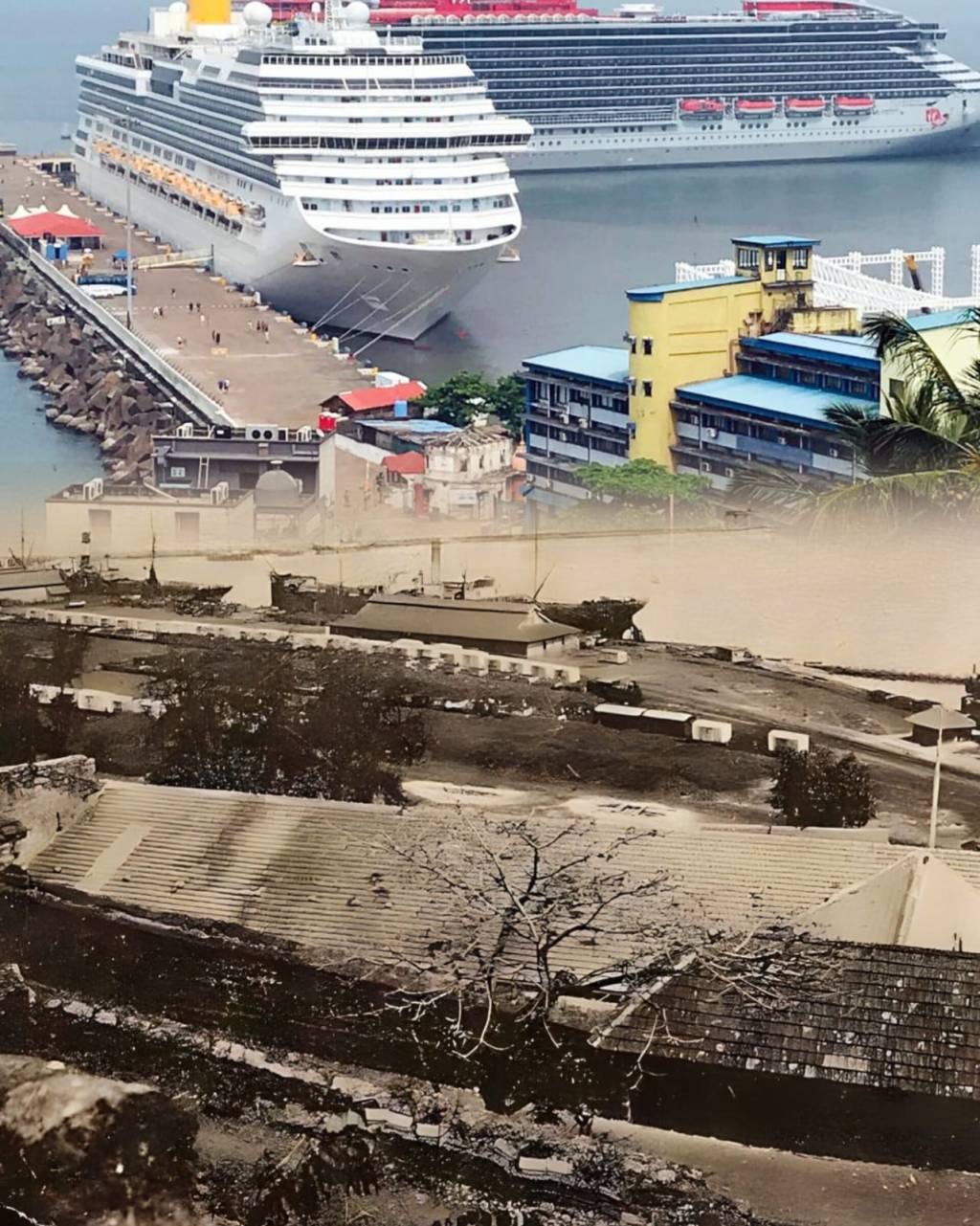
Mormugao Port is a historic Indian harbor situated on Goa’s western coast. Established in 1885, it leverages a naturally sheltered bay on the Zuari River’s southern end.
History
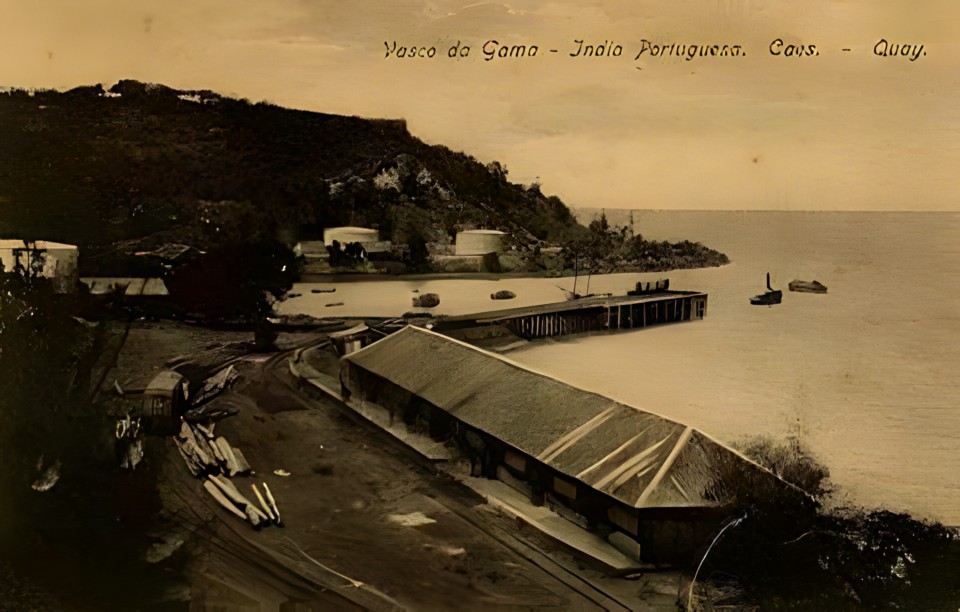
Recognizing Mormugao’s exceptional natural harbor, the Portuguese and British governments collaborated under the 1878 Anglo-Portuguese Treaty to enhance maritime trade. A British company, specifically formed for this purpose, was tasked with modernizing the port and constructing a railway line to connect it to the interior. This ambitious project, entirely funded by the Portuguese, commenced in 1878. The harbor was completed in 1885, followed by the inauguration of the railway line to Sanvordem in 1887.
Strategic War location
Mormugao’s strategic importance to the Portuguese is clear in the construction of a formidable fortress to safeguard the harbor. The port, a vital lifeline for trade and revenue, necessitated robust protection from potential attacks. To counter threats, primarily from Maratha forces, the Portuguese initiated plans to establish a fortified town in the area. They even considered a shift of the colonial capital from Old Goa to Margao. Ultimately, this relocation was abandoned, but the decision highlights the critical role Mormugao played in Portuguese defense and economic strategy.
During World War II a German merchant ship, the Ehrenfels, disguised as a neutral vessel, was secretly transmitting vital information to German submarines. This operation was brought to an end when British forces executed Operation Creek at the Mormugao port, resulting in the bombing of the Ehrenfels.
Mining history at Mormugao port
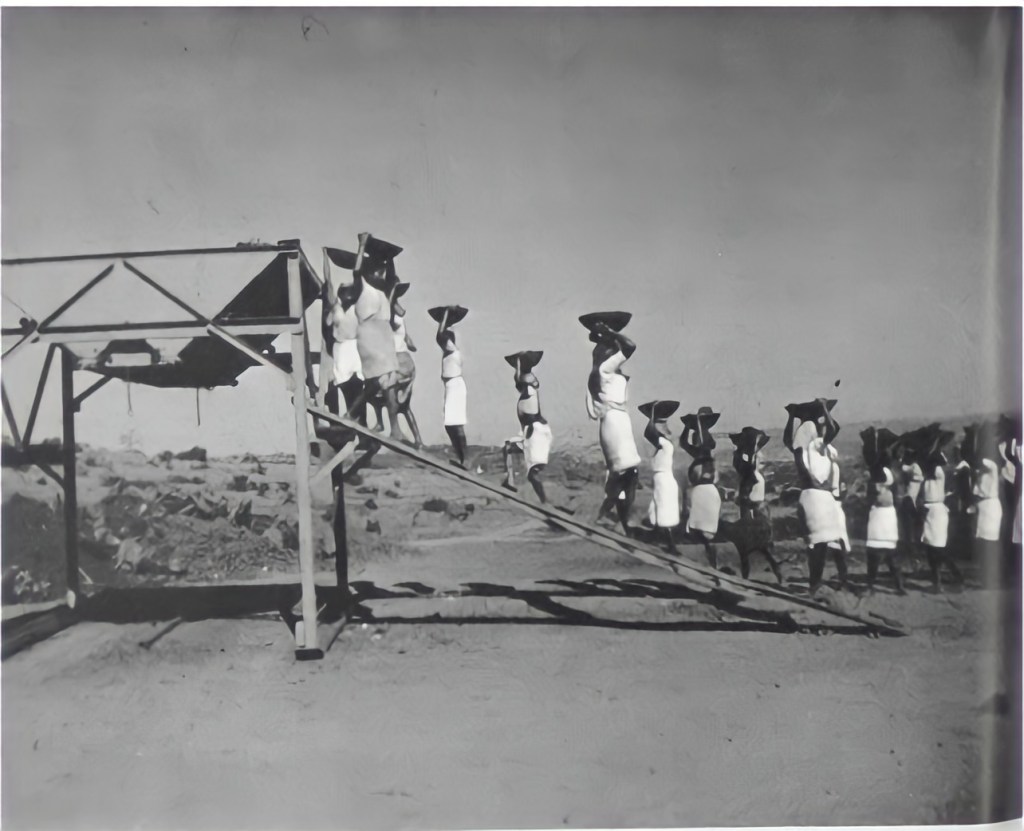
Goa’s rich mineral deposits have a history dating back to the Portuguese era. While the existence of iron ore was known as early as the 1700s, its extraction was concealed to protect the territory. Indigenous groups, particularly the Dovolos of Navelim and Salcette, continued secrete mining activities throughout the Portuguese period. In the early 20th century, a French company sought to capitalize on Goa’s mineral resources by initiating plans to extract and transport manganese ore from Bicholim to Margao.
The post-World War II era witnessed a surge in mining activities in Goa, driven by global reconstruction demands. Politically advantageous for Japan, Goa became a primary source of iron ore, eclipsing British India. By 1961, when Goa was liberated, hundreds of mining concessions had been granted. Extraction was a labor-intensive process, with women and children carrying ore on their heads to bullock carts. This exhausting journey continued by sea, with manual loading onto sailboats at the jetty and subsequent manual unloading at Mormugao Port for shipment. The onset of commercial iron ore mining in Goa post-1947 dramatically transformed Mormugao Port’s operations. Port traffic surged from a modest 278,000 tonnes in 1953 to an impressive 14.8 million tonnes by 1973-74. This exponential growth solidified Mormugao’s position as a major Indian port, with nearly 40% of the country’s iron ore exports channelled through its facilities.
Watch this reel about economy through mine imports at the mormugao port.
 Aadle Goi
Leave a comment